What is the libertarian response to a claim along the lines of: “In a free market, you will be sold into slavery?”

Mr. Coupon

That’s correct, they can indeed be sold. For this to happen, slaves must be perceived as a commodity:

  • by the seller
  • by the buyer
  • by those around them.

If you are enslaved, but all potential buyers do not perceive slaves as a commodity, then congratulations, you will not be sold; you will remain a slave to whoever enslaved you. For example, the state.

If you are enslaved, but the enslaver themselves does not perceive slaves as a commodity — congratulations, you won’t be sold either; you will remain a slave to whoever enslaved you, meaning, for example, the state.

If you are enslaved, they want to sell you, a potential buyer is ready to buy, but all those around do not consider slaves to be a commodity — congratulations, a free market for slaves will not emerge, the transaction is unlikely to take place because it will be considered illegitimate, and you, again, will remain in slavery to whoever enslaved you, for example, the state.

But if everyone around considers not only the purchase and sale of slaves to be illegitimate, but the very acts of enslavement themselves — well, then — alas for you — you will not only not be sold, but you are unlikely to be enslaved at all; you will somehow survive without a master.

There is no one to enslave the poor fellow: feed him, give him a bunk, provide him with work. Even Navalny was given a bunk! And free housing!

Why is it forbidden to sell children into slavery? And how will private police maintain order if it is more profitable to steal?

Anonymous question

The second question is quite simple, so I will answer it first. For a private security guard, it is also more profitable to steal products from the store than to ensure others do not steal. But only in the short term; afterwards, he is fired, with more or less of a scandal. It is important not to give him powers beyond those strictly required to perform his job duties; otherwise, he will not only steal but also intimidate other staff to cover up the theft by creating fictitious reports for the owners. I do not exclude that such schemes do arise in some places due to the negligence of store owners, but usually, there is a system of incentives that makes such behavior unlikely and prevents it from going too far.

Now let’s talk about children.

To begin with, I will note that even now, under the state, children are quite readily sold into slavery. And I am not even talking about state slavery, such as the forced labor of Uzbek schoolchildren collecting cotton, but about private slavery, which is forbidden by that very same state. Nevertheless, it is precisely under the state that the incentive system for the police, as highlighted in the answer to the first question, is such that it may be more profitable for the police to sell children into slavery themselves or to protect such trade. Private child labor slavery is more characteristic of some part of Sub-Saharan Africa with its rather primitive mining industry. In wealthier countries, sexual slavery is more prevalent.

The question is, why does all this hardly concern the authors of questions about child slavery under ancap? It is easy to answer. Under the state, private child slavery is considered marginal; it takes place somewhere far away and does not catch the eye. The authors of the questions are concerned specifically about a potential situation where such slavery is respectable. When you encounter it on the street and in the information space at every step, and therefore have to put up with the existence of this phenomenon, and if you try to fight it with means of moral pressure, you yourself find yourself in the skin of a marginal who prevents decent people from behaving in their usual way.

Could child slavery become a respectable practice in the ancap community? Of course, it could. According to the principles of libertarianism, restitution is a perfectly legitimate way of acquiring property, and if, for example, a child damaged some expensive property (which children sometimes do), then it is perfectly permissible to demand compensation from the child and even collect it by force, since the child possesses self-ownership, and at what age full legal capacity is assigned is a matter of convention. Restitution is perfectly permissible not only in monetary but also in-kind form; there you have the prerequisite for slavery.

Thus, practices where a child works off a broken neighbor’s window by mowing the neighbor’s lawn are more than likely under ancap, as they do not cause moral repulsion. What could prevent the development of harsher practices, where, for example, something is demanded from a child as restitution that an adult would find humiliating for themselves, such as filming in a BDSM video? It is that very moral repulsion that will prevent it. Too many people would be found who, applying the situation to themselves, would state that they would not agree to this for any amount of money, and therefore, to them personally, such restitution seems unfair (the subject of the conflict is valued as disproportionately less significant than the damage caused during restitution). Libertarian morality requires intervening in conflicts on the just side, so a child in such a situation would easily find defenders.

Well, if that is the case, then the authors of questions about child slavery under ancap can breathe a sigh of relief: it will certainly not get worse than under the state. They can continue to boycott manufacturers of clothing made using forced child labor and leave the ancaps alone.

The Road to Serfdom. Review

Commissioned by the Tea Club

Many reviews and critiques have been written about Hayek’s “The Road to Serfdom,” where the book is placed within its historical context, its position among Hayek’s publications is identified, and a brief analysis of its ideas is provided. As much as I would like to avoid all this academicism, it is impossible, as the entire book is a political pamphlet on the pressing issues of the day, and the only reason the work remains relevant to this day is that ideas do not die—and this applies not only to Hayek’s own ideas, but also to those he fought against.

“The Road to Serfdom” was published in Great Britain in 1944, when the country was finishing its fifth year of war with the National Socialist Reich. Victory over the Reich was simply a matter of time, and one could have calmly begun to reflect on the postwar restructuring of the world, but the author felt it was far more important to draw the public’s attention to the fact that the dragon-slayer was beginning to increasingly resemble the one he was fighting. Hayek saw the victory of the Labour Party in the upcoming general elections as the most terrifying danger for Britain. That is exactly what happened. As a result, Great Britain accumulated an economic lag behind freer countries right up until the Thatcher reforms.

The main idea Hayek fights against in his book is the notion that economic planning brings prosperity. He painstakingly demonstrates that the temptation to slightly regulate from above for the greater benefit of society is the first step toward regulating everything and everyone to the point where it is impossible to breathe: there is no natural optimum on this road, upon reaching which the government would stop on its own and declare that things are now good and nothing more needs to be tweaked. He also shows that regulation is total, and economic freedoms are inseparable from political ones, so people far removed from economics should not look benevolently upon interventionist efforts, thinking that as long as political freedoms are left untouched, economics is a narrow specialized topic and experts know best how to steer it.

Hayek did not claim that everything was hopeless and that, having stepped onto the road to serfdom, humanity would be unable to stop. If he had believed so, he would have had no need to write the book. He did, however, argue that the further one goes down this road, the harder it is to stop, and therefore socialism is best fought at the far approaches. Unfortunately, practice has shown the exact opposite: it is extremely difficult to deny socialists small concessions while society as a whole is liberal, but when everything is already regulated to shreds, both society and the government tire of the constant tightening of the screws. A sufficiently strong demand for deregulation emerges, it is carried out, and people breathe a sigh of relief, but it soon turns out that the leviathan, having retreated in one place, is already pressing in another.

In the article Barrier on the Road to Serfdom: Dead End or Detour?, Bitarch and I mentioned John Meadowcroft’s thesis that it is the hybrid society that proves to be stable, unlike the liberal or totalitarian ones, and we also pointed out that neither increasing transparency nor reducing direct state participation in the economy helps avoid the fact that the overall regulation of society continues to grow slowly.

The book “The Road to Serfdom” is a good example of rhetoric that can and should be used when working with politicians. The fact is that most of the arguments in the book are no longer relevant, unless, of course, you are dealing with hardline Marxists; against more or less modern supporters of state regulation, it makes sense to apply Hayek’s later texts, such as “The Fatal Conceit.”

Imagine that the doctrine of containment had been developed as early as the 17th-18th century

Suppose states and simply wealthy people had access to killer bees. In that case, the war between the North and the South would not have happened, and slaves in the South would not have been freed. On the other hand, Lincoln would not have employed the flawed practice of printing greenbacks, which led to the Long Depression, and perhaps in the end the world would not have fallen into leftism and we would still be on the gold standard (oh, dreams, dreams). However, even today, one might be able to travel to the Confederacy and legally buy oneself a slave girl for a few gold coins. Or not? In short, my question is: who would have freed the slaves had DS been developed before the US Civil War?

анонимный вопрос

Throughout the nineteenth century, slaves were freed all over Eastern Europe, in Russia, and toward the end of the century, in Japan as well. The government freed them without waiting for revolutions and civil wars. There were a multitude of prerequisites for this, primarily economic. In Australia, an economic boom also occurred after the abandonment of slave labor in agriculture, and the economy there was quite similar in structure to the economy of the southern US states.

Even if the southern states had managed to resist this trend for a while, slaves would have been finally freed in the 20th century by tractors and cotton pickers.

There is an opinion that the Union and the Confederacy would have developed much more dynamically had a war not occurred between them. The Union would have had to temper its protectionist zeal because the Confederacy, advocating for a free market, was right next door. The Confederacy would have had to soften the condition of slaves, aiming roughly for the prosperity level of Irish immigrants in the North, so that the flow of fugitives would remain within more or less acceptable proportions. And, of course, both countries would not have suffered such human losses and would not have damaged their economies so severely. By the way, in the absence of war, two transcontinental railroads would have been built instead of one.

So, Lincoln paid for his disregard for the Constitution quite justly.

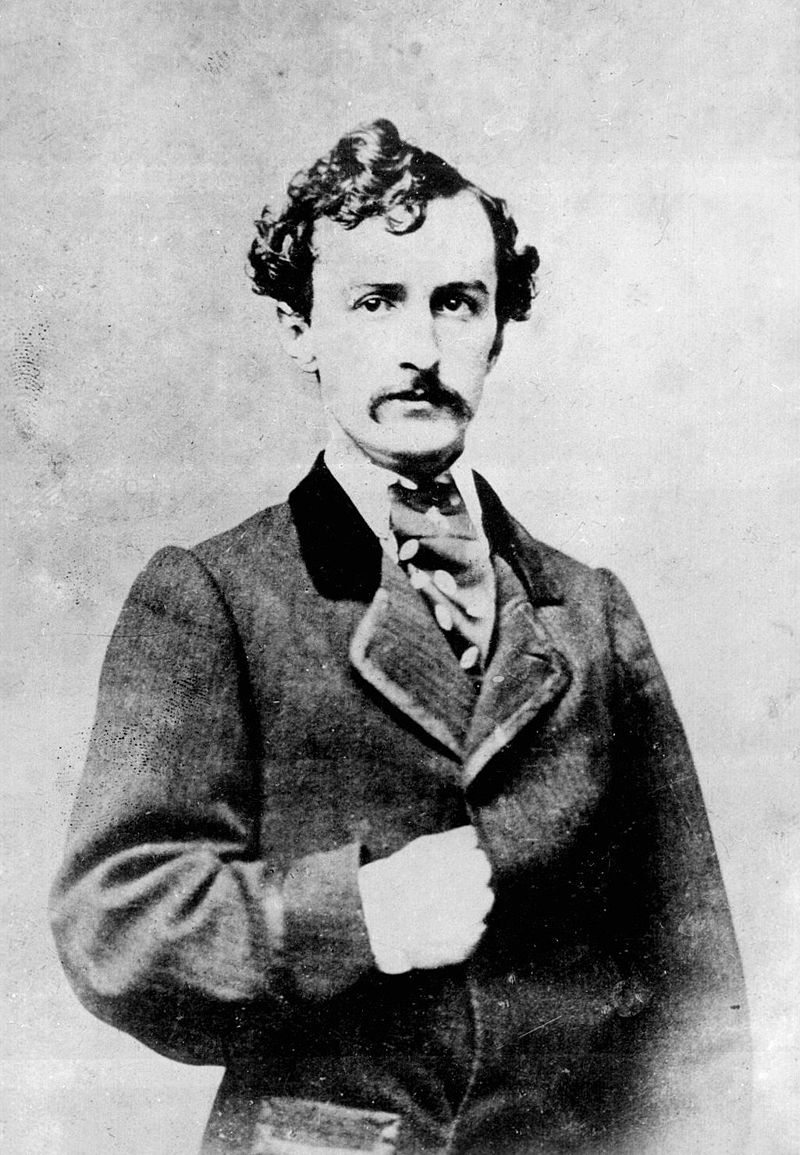
Therefore, today John Booth, who rid humanity of this unpleasant tyrant, deservedly graces the cover of the post

What is this “private slavery” in libertarianism being referred to in the post from July 30?

The anarcho-capitalist camp—Rothbard, for example, analyzed this issue in detail in “The Ethics of Liberty,” explaining the impossibility of defending a slave contract within libertarian theory.

анонимный вопрос

In the final paragraph of the post from July 30, I do indeed mention voluntary private slavery in passing, but in an extremely narrow sense. If there exists a methodology that allows for complete control over a person’s actions through some mysterious subconscious manipulations, yet all these manipulations are non-violent, then the person is de facto enslaved and, from the perspective of an external observer, completely voluntarily performs any actions required by the manipulator.

Such things are the subject of horror stories about the coming dominance of big data, which will compile a full profile of every person and allow for ideal influence over them, so that under this influence, they might go to the polling station to vote for you, go to the store to buy your product, or dance on the Maidan.

In my view, such a dystopia is the flip side of the utopia of a bright communist future, where abundance is ensured by a planned economy managed by benevolent supercomputers—and it has just as much chance of being realized on a global scale. However, I cannot rule out isolated cases of gaining complete control over human motivations through non-violent manipulations, which is why I mentioned them in my analysis of the concept of free will.

This has nothing to do with Rothbard’s argumentation regarding the impossibility of libertarians defending a slave contract, given the absence of a contract.

It looks as ridiculous as a horse harnessed to a sports car

Is it possible in some way to reconcile libertarianism with the idea of the absence of free will in humans?

анонимный вопрос

Very often, these kinds of tricky questions boil down to a lack of clarity in definitions. On the other hand, imprecise definitions provide an excellent opportunity to reflect on the entire topic at hand, which I will gladly do.

Historically, when speaking of free will, it is implied that although God is omniscient and omnipotent, having defined all the laws of existence, and that not a single blade of grass blooms without His providence, He made an exception specifically for humans. Having created man in His own image and likeness, and knowing his entire destiny from beginning to end, God nevertheless does not interfere in his behavior—except in those cases where He does, which is then termed a miracle or divine inspiration, but that is another story.

The concept of free will did not become established in Christian doctrine from the very beginning; in the writings of Augustine, we still see complete predestination, where a person has not a single chance of salvation unless it was predestined for them from the start. Within the framework of this strange doctrine—”I am a slave (that is, a speaking tool) and I will sternly state this”—there was no chance for libertarian ideas to even emerge. Indeed, what self-ownership can be discussed for a speaking tool that does not dare even to sneeze except by the will of the master.

If we shift from theology to a more commonplace understanding of free will, it could be defined as the ability to act contrary to someone’s manipulations. Following this, we can observe that, indeed, quite many people do not possess free will in full, as their choices are determined by context rather than internal preferences (such matters are analyzed in detail in the trendy field of behavioral economics). Can pronounced libertarian relations exist in a society where such manipulative practices are actively applied? Yes, they can. Such images are often painted for us, showing a world of triumphant corporations. As long as manipulations are non-violent, libertarians will clearly point to their legitimacy, whereas violent opposition to them, such as destroying advertising materials, may indeed be suppressed in such a society.

Still, we are not talking about total zombification in our fantasies today, but even if we were, we would have a situation of private slavery, which is either voluntary—in which case we have no legal grounds to oppose it—or forced—in which case, again, libertarian doctrine provides all the tools necessary to counteract such practices.

A manager’s dream