Anonymity, protest, division of labor

A post from the Telegram channel “IT criminal cases SORM rossiyushka” is actively spreading across the network about how important it is for everyone to set the correct privacy settings in Telegram, after first updating it to the latest version. The update was made following the outrage of protesters in Hong Kong, who discovered they were being deanonymized by adding all possible phone numbers to the contact list, after which Telegram’s friendly interface immediately gave up the activists’ accounts by phone number. The hole has now been patched, but the old settings are still there by default; they must be changed manually.

Not long ago, I also mentioned a post from the Cryptoagora channel about how to obtain fake bank cards and SIM cards without intermediaries (spoiler: realistic silicone masks are used).

And very recently, Bitarch spoke out regarding the fact that automatic facial recognition systems are inevitably doomed to false positives, meaning that one can not only cover their tracks this way, but also try to feed the opponent members of their own gang: other security forces, odious officials, and so on.

In light of the fact that the Russian authorities are actively purchasing cameras for facial recognition at mass protests, the opportunity arises to provide the press with headlines like: “Zhirinovsky threw feces at a Rosgvardiya officer,” or “Three Putin doubles urinated on a cop.” But—no.

The complication of the protest and the tightening of the screws by the regime currently dictate a clear maintenance of the boundary between legal and illegal actions. During a legal protest, whether agreed upon with the city administration or not, a person limits their toolkit and also expects other protest participants to do the same. Any other behavior will logically be perceived by them as a provocation. At the same time, at other times when the streets are not flooded with security forces, nothing prevents anonymous individuals from carrying out well-prepared actions that discredit the regime, appearing on camera in the images of, for example, Petrunko or Kusyuk.

It is also worth considering in advance which role in the protest suits you best and not striving for versatility. You can sit anonymously on the internet and write articles of a quasi-extremist nature, or you can speak from a podium—but it will be very difficult to combine both functions, as attention to a known activist increases the probability of deanonymizing their persona. You can attend agreed rallies, appearing on surveillance cameras and in cell operator logs, but it will be difficult to combine this with posting flyers or smashing police windows, deanonymized using Russian Elephant. Finally, you can donate to projects you like, although earning money for this may not leave you, for example, with opportunities for serious offline activism.

There will be no post tomorrow; in my offline incarnation, I am going to observe the elections. But if the whim of running for office myself had entered my head, I would have had to hand the channel over to someone else. There is no helping it; every choice entails costs. So let’s drink to the hope that tomorrow we will not regret the choice we made today!

Put on a mask — don’t get caught

The Russian state has learned the word “panarchy”

In Tyumen, three schoolchildren decided to distribute leaflets advertising panarchy. They ordered a print run from a printing house; the printing house tipped off the police, the print run was seized, and the leaflet is now being checked for extremism. If it is found, a criminal case will be opened. If not, it is presumed they will return the people’s property and leave them alone.

Let’s help the experts make the right decision and explain to as wide a circle of people as possible that:

  1. The stationary bandit theory is scientific mainstream
  2. Panarchy is a fully academic direction of political thought
  3. The transition to panarchy can only be peaceful

So far, only znak.com has written about the incident. If anyone has contacts in the media, please use them to spread this information. I would also be happy to talk about panarchy to any publication that decides to educate its readers on this matter.

As for those who wish to use such a tool as leaflets to educate the public, I recommend using a printer; furthermore, it is better to distribute materials not by pasting them on bulletin boards or putting them in mailboxes, but by handing them out person-to-person at political events.

The object of the Tyumen police’s curiosity

AI will help the authorities fight against oppositionists… or the other way around?

Bitarch’s column

Supporters of authoritarian power sometimes frighten libertarians with artificial intelligence (AI) systems. They try to prove to us that after their implementation, all our struggle will become meaningless, because the state will be able to instantaneously detect and nip any oppositional activity in the bud.

However, AI, like any other technology, is a double-edged sword — just as a stationary bandit can use it against us, we can use it against the authorities. The use of AI for the deanonymization of security forces by projects like “Scanner” and “Russian Elephant” is only one possible example.

Also, such systems are prone to false positives. This insurmountable property of AI can be used intentionally by introducing false targets to overload the system. Not the neural network itself, but the investigative bodies and security forces, who will have to spend effort investigating fake cases, overlooking real oppositionists. And if politicians are substituted as false targets, the entire system of the stationary bandit will fall apart.

Why “erroneously”?

Russian elephant. Interview.

Today is my debut in the interview genre, and I think it turned out quite interesting. I hope to replenish this new section with fresh materials from time to time. So, today I am not answering questions, but asking them. The one answering is the Russian Elephant.

There is a lot written online about your project “Russian Elephant”. Officially, you state that the project’s name was chosen because an elephant is distinguished by its intelligence and long memory for grudges. However, to many, the allusion to the abbreviation SLON — “death to cops by knife” — popular in the Soviet criminal world, is quite obvious. It is unlikely that you did not consider this circumstance. Could you comment on to what extent the expectations of those who interpret the name of your project in this key might be justified?

Someday in the Beautiful Russia of the Future, we will tell the whole story of how the Elephant was created, and we assure you, it will be a truly fascinating tale. Right now, such a story is impossible for obvious reasons.

Anyone can interpret anything however they want, but developing this thought will inevitably lead us to such delightful (not) moral puzzles as “Do people who play computer shooters want to kill people?”, “A song by such-and-such a group is about rape. Does this group call for rape?” and other attempts to stretch Columbine into allegory.

However, the official position of the Russian Elephant remains the same: we do not call for violence in any form. We call for the revival of the institute of reputation in Russia, and it is clearly impossible to do so without a long memory for grudges.

How do you comment on the recent video by Mikhail Pozharsky “The Mask of the Beast”, where he points out that de-anonymization is needed primarily for the police officers themselves, so as not to lose their human face?

Pozharsky is delightful in almost everything he does, and this video with a reference to Golding’s “Lord of the Flies” is no exception. From an ethical point of view, one can indeed agree with the position outlined in the video.

Moreover, it’s funny that this publication of ours practically coincided in timing with the release of a new video from Whalesplaining.

Russian security forces are massively resisting their de-anonymization; in other words, they insist on bearing collective responsibility instead of individual responsibility. Does it not follow from this, as well as from your agreement with the main message of Pozharsky’s video, that projects like the Russian Elephant should de-anonymize not only those security officers whose crimes have been recorded, but actually everyone who, as a representative of security agencies, hides their identity?

Given how low the standing of police authority (previously: militsiya) is in Russia from the perspective of the institute of reputation, this proposal sounds completely reasonable. We have a historically strong (brrr!) slave mentality that “the boss is always right” and other “all power comes from God” notions, and unfortunately, this also applies to police officers, although, one would think, it is just a job, like being a banker, a cashier, or a taxi driver.

And when every day you read news of the series “Anapa police officers from the anti-corruption department convicted of bribery,” “police planted drugs,” and “Rosgvardia officer killed a two-year-old boy,” you naturally get flabbergasted and, yes, definitely desire more protection from possible violence, in this case — state, monopolized violence.

This is from the same series as “When I walk through Paris, I can approach a police officer to ask something, or almost just to chat. When I walk through Moscow and see police officers coming towards me, I prefer to cross to the other side of the street.”

The Rosgvardia, however, is in principle a crime by Putin against the people of Russia.

You answered the first question quite vaguely, so let’s clarify with a concrete example. You post the personal data of a certain security officer, indicating the crimes he committed, and after some time, this officer’s car is burned, or a window is broken, or the lock is filled with expanding foam — in short, an anonymous prank is played, of the kind that they love to use against opposition activists in problematic regions. How will you officially comment on what happened on your website and in social networks?

Not at all. Even if this was a consequence, we did not call for it. If someone is “just following orders,” or, which is much worse, truly believes in all the propagandistic bullshit about the State Department, Maidan, and the orange threat, and furiously beats a person lying on the ground with a baton, then let them not be surprised that one day karma may send them a boomerang.

I remind you that during the protests in Magas, 13 Ingush police officers refused to carry out orders and go against their own people. Now they are being tried.

Let’s talk about technical details. Can you briefly tell us about what the Elephant’s “innards” are? Is the computer magic based on your own engine and capacities, or does it depend on third-party services? What is the share of manual work? What is the percentage of identification errors, and at what level of confidence that the perpetrator has been correctly identified do you decide to publish their data? Do you check the authenticity of publications from other projects like yours, for example, the sensational publication by Scanner about the identity of the Ministry of Internal Affairs employee who punched a girl in the stomach? Do you collaborate with related projects?

The computer magic is based both on existing technologies from various giants like Amazon and Google, as well as on our own developments. We are also closely integrated with a number of projects using technology similar to FindFace, which NTechLabs is currently successfully selling to the Ministry of Internal Affairs. Accuracy is quite high, although for extra confidence, we check information using other indirect data. Naturally, no one is immune to mistakes — for this purpose, we are recruiting a quality control team to identify such situations and react to them. I will be happy to provide specific figures a bit later.

On the website, you promise not only to provide the necessary evidentiary base for prosecuting perpetrators according to the law, but also funding for human rights defenders and lawyers who will handle the criminal prosecution of these lawbreakers. Do you intend to initiate criminal prosecution yourself by hiring lawyers, or only to support such initiatives of private individuals? If the latter, how is the quality of work intended to be controlled? Could it not happen that, at your own expense, the authorities use fictitious lawsuits to cut off the possibility of actual prosecution?

Not necessarily private individuals, if a lawsuit is filed on behalf of some organization that already has successful experience in countering state violence and repression, we can join their initiative, thereby creating a synergetic effect.

As private individuals, we already actively donate to human rights protection and political activism. Redirecting the specified part of the donations that the Russian Elephant receives / will receive to the same goals seems to us the most reasonable. We are spending our time and taking risks, and all that other stuff — but those innocently convicted, such as Egor Zhukov and other figures in the case under article 212 for July 27 and August 3, need this help significantly more.

So far, the project exists in the form of a brief description on the website, as well as channels on Twitter and Telegram, where the data of de-anonymized security officers is posted from time to time. When will the project be considered officially started, and what functionality will it include at that time?

The current state of development can be well described by the following slogan: MAKE A ̶D̶E̶S̶T̶R̶O̶Y̶ DEPLOY.

The working functionality of the Russian Elephant, which everyone is expecting, will be available in the coming days, and perhaps, by the time this interview is published, it will already be available. Moreover: a so-called “roadmap” will be visualized, where all the stages of what we intend to do will be shown. This is also an example of the institute of reputation — if you promised something, be so kind as to do it, or you shouldn’t have promised in the first place.

Regardless, what is currently being posted in the TG channel, Twitter, and Instagram is, in fact, just attracting attention and maintaining interest. None of these services provide sufficient functionality for our goals, therefore a custom one is being developed.

The Elephant has many predecessors who hoped to somehow harness the institute of reputation. For example, Navalny runs the Black Notebook. In your opinion, what was lacking in earlier projects so that the institute of reputation in Russia could truly work as a real force influencing the behavior of government representatives in terms of preventing illegal actions, and how do you intend to fill those gaps?

One way or another, protest is indeed moving into the moral-ethical field, and when a singer like Manizha says: “I refuse to perform at such-and-such a festival, I’m not about politics, I’m the about music, and music should unite, not sow discord” — that’s one thing; when meanwhile the group Splin (despite all their undeniable talent and contribution!) doesn’t see a problem with their performance at that same festival — that’s quite another. The market, as they say, will decide, and the institute of reputation is its prophet.

In Russia, a civil society is indeed beginning to emerge. And it depends on all of us — young, proactive, capable, who can, among other things, “vote with their wallets,” whether it will form fully or wither halfway.

By what criteria do you intend to evaluate the success of your project? How public will your evaluations be? As you understand, for those who decide to invest money into something, it is important that the investment proves effective.

Perfectionism is inherent in us to a sufficient degree — to get involved in something average = wasting your time, therefore aut Caesar aut Nihil, or be the best, or why do this at all?

Accordingly, our goal is the maximum coverage of the Russian Elephant’s activities, so that people know about us, talk about us, publish about us, so that our symbolism, which was thought out four times over, is visible, so that it be recognizable and, in professional language, viral.

The more people know about the Russian Elephant, the more people know about those associated with state violence, aiding in the usurpation of power and propaganda. The more people know about these people, the closer we are to a fully functioning institute of reputation. That’s exactly what we aimed for initially, right?

As an example: our Instagram has been around for 3-4 days (the interview was taken on August 23 – Ancap-tyan). On the second day, a news aggregator account with 30k followers subscribed to us — and our call to tell people about the Russian Elephant was heard — a repost, a couple of stories with an additional call “from themselves”…

In general, 500 followers in these 3-4 days, and, based on experience, it only gets easier from here; reach metrics grow exponentially.

What will be your estimated budget by the time you reach the expected performance? How long can you work in such a mode before you start receiving donations in the necessary volume?

Why this attempt to look at the Russian Elephant from a commercial perspective? But, by the way, since you’re trying — would you buy shares with the ticker SLON, if we went IPO? 😉

We are capable of maintaining the project’s functionality at our own expense for an unlimited amount of time; the entire Elephant team, to put it mildly, are not dependents or idlers. The business of Alexander Litreev is absolutely public: as an advertisement — Connecto VPN — your choice for safe and anonymous surfing at the price of a cup of coffee per month. By subscribing to Connecto, you support the market and the institute of reputation.

However, if (let’s imagine for a second the most negative, but fortunately absolutely unrealistic variant) the Russian Elephant does not receive a single kopek of support over its entire time of operation, then this would signal that society simply does not need the counteraction to state violence and the revival of the institute of reputation. Do you feel indignation while reading these lines? That’s correct — it is indeed an unrealistic variant. Society is ready for change, moreover, society is actively demanding them.

Therefore, we are not worried that the Russian Elephant may not be appreciated to its full value (it has already been appreciated and will be appreciated even more). We are worried about justifying the high expectations placed upon us.

As Confucius once said a long time ago (and was popularized in 2007 by Pavel Durov): “Do not worry about not having a high rank. Worry about whether you are worthy of having a high rank.”

I think if such a project went IPO, I would be more concerned that its creators might be trying to make money through blackmail. I was interested specifically in your ability to fully realize and promote the project with your own strengths, and I am very glad that you have such an opportunity..

Thank you very much for the answers, and good luck to your project!

Ultra-briefly on libertarianism

Following a tip from the Antistate channel, I watched a video from the MGIMO political club, where all the main currents of libertarianism are explained in just over six minutes. For me, six minutes was taken up by the description of agorism alone (by the way, there will soon be one about ancap, and that will likely be even longer — I can’t help myself, I get carried away, and every new video ends up longer than the previous one).

Overall, it turned out to be a rather strange “Everything About Elephants”; I don’t quite understand the target audience of the video. For political science students — it’s too condensed. For grandmothers — it’s too saturated with terms. For school children — it’s not memey enough. It feels like they worked for a grade, although, in theory, the political club should be optional for students.

If you think I’m wrong, please let me know in the comments or in the chat. Perhaps I should make the presentation in my own videos more concise? After all, the younger political club channel has a thousand subscribers with only three released videos, while Libertarian Band has only eight hundred, so it wouldn’t be a sin to learn from colleagues, if I can figure out the trick)))

Here he is, the Naked Devil, the famous Estonian dismembering executioner!

Anarchy, panarchy and etatism

John Zube (John Zube), 1986

Summary by Aegis Mirijam

The full English text is taken from the website panarchy.org – the largest library of texts on panarchy.

Anarchy and Panarchy are not two opposing forms of social organization. In fact, Panarchy is primarily a method of solving the problems of social organization, and through these methods, anarchy, as well as statism or communism, or any possible social model, can be realized and implemented by those who share the idea.

Panarchists call for freedom of action for statists, as well as for all others. Everyone could have the regime and conditions they chose; in that case, they would no longer need to fear or fight one another. No more forced “marriages” with any government, army, trade union, or school. Every individual should be free to secede from any of them by making a unilateral declaration and to join or establish any alternatives they may like, always at their own expense and risk.

Panarchism is nothing other than the freedom of disconnection and connection, consistently applied in spheres where it has not yet been realized, namely in political, economic, and social relations.

Libertarians say: Let those who believe in religion have religion; let those who believe in government have government; but let those who believe in freedom have freedom and do not force them to accept a religion or government they do not want.

Charles T. Spreading

Anarchists should not threaten their faith with destruction, but they may try to convey it to them through their words or their own joint and competing examples of living.

There is no difference between consistent libertarianism and anarchism. Their common foundation is voluntarism, self-reliance, natural rights and freedoms, individual sovereignty, and free choice. It is only a matter of consumer sovereignty in relation to so-called “government services.”

Full suffrage includes the right to vote for oneself outside of any compulsory political, economic, and social system and in any system that corresponds to one’s own individual choice or invention, and to have, in addition, all other electoral powers you wish to have — but only among like-minded volunteers.

The opposition of party politics to party power does not require the opposition of political, economic, social, and military policy to individual separatism, but rather requires such consistent opposition to territorial statism and extraterritorial autonomy. Only complete extraterritorial autonomy for all dissenters can establish peace, justice, and freedom for all.

Panarchism proposes providing the possibility of conscientious objection to military service, compulsory taxation, trade unions, school attendance, and other specific compulsory practices, but also an overarching objection against all compulsory, exclusive, territorial, political, economic, and social systems, institutions, and practices. The practice of panarchism implies individual secessionism and personal or non-territorial legal organization on a voluntary basis, regardless of whether the secessionists and voluntary partners are anarchists or statists.

Panarchists will also be mistaken and repeat mistakes. But they will do so with a decisive difference:

Their mistakes will be made only at their own expense, not at the expense of politicians, bureaucrats, and ruling parties, largely at the expense of other people, even dissenters.

Panarchy also relies on the full recognition of all individual rights — to the extent that they are known, publicized, and understood. Since individual rights offer only options or spheres of free action, no matter how natural they may be for fully adult and enlightened people, they do not obligate people to use them to the full extent.

The goals and means of panarchists could be summarized with statements such as: statism for statists, anarchy for anarchists, free trade for traders, protectionism for protectionists, non-violence for pacifists, defensive force for those who see its justification against initiated aggression, capitalism among consenting adults, and any type of socialism for those who desire it for themselves.

Panarchy, once realized, will give anarchists the opportunity to enjoy anarchic relations with each other, right here and now, without interference from statists. Moreover, once anarchists accept panarchist tolerance, they will have a common platform with statists and all other minority groups who wish to maintain or implement various ideals among themselves, following panarchy.

A question regarding military actions in Ancapistan

For example, there is a large amorphous country in the north of the continent; the climate there is cold, there are few valuable resources, and a freedom-loving people live there, where almost everyone has an AK under their bed. There are cities in Ancapistan, where order is maintained by private companies and a small PMC for special operations.
Suddenly, some valuable resource is found in this beautiful country. A neighboring country, Etatistan, is an ordinary country with corruption and standing armed forces (of a sort). And Etatistan decided to seize this resource. It failed to acquire it through market methods (the landowner did not sell his land, and blackmailing him to get it also failed), and Etatistan declares war on Ancapistan.
And my question is: how can Ancapistan defend itself in order to maintain its independence and remain Ancapistan?
How can an armed people, who have plenty of firearms and light armored vehicles (like jeeps and BMPs), withstand an army with aviation and heavy equipment?

Baker

This question has been hanging for a long time; I was too lazy to answer it because I had already answered a very similar one. And then a post on the Freedom pride channel appeared, which touches upon a related topic. Why not take advantage of such a free ride?

As is easy to see, the topic of direct military confrontation between a non-state society and a state military machine worries many, because war is historically the most important thing a state had to be able to do if it wanted to survive; and thanks to its competencies in military affairs, practically the entire Earth is today divided among states, while non-state societies lead a marginal existence on the fringes of civilization.

Zolotorev, whom I am quoting, emphasizes that the ancap community, all other things being equal, is definitely wealthier than the state; due to decentralization, it can afford more flexible tactics, and the costs of implementing a state from scratch on the territory of Ancapistan conquered by the state would be disproportionately high for the state—in other words, the game would not be worth the candle.

Freedom pride shows why it would be difficult for a single gang to seize power in a conditions of an already established ancap. But it also states that if it were not a gang, but a state, it would become a problem.

Therefore, in conclusion, I want to suggest you read my longread on the doctrine of deterrence, which shows exactly that a means has already been invented to prevent a state from attacking you—the threat of guaranteed destruction of the state leader. The state is centralized, and this is its weakest point: it is enough to demotivate a very small circle of people from attacking, and the attack will not take place.

So, of course, an AK under the pillow is great sports equipment, but the key role in the conflict will be played by that very small PMC for special operations you described. This “department for working with difficult clients” at the insurance company, in the event of military action, simply captures the commander-in-chief of Etatistan and twists his balls until he agrees to withdraw the troops and pay a penalty. And if they can’t capture him alive, the problem will be solved by a dozen Tomahawks or something along those lines. This is significantly cheaper than heavy armored vehicles and other means of destroying large military formations that Etatistan possesses.

I will note that Etatistan cannot respond symmetrically, as there is no government in Ancapistan. And even sabotage at a PMC military base would only lead to the insurance company simply having to hire another PMC somewhere else, or simply announcing a substantial reward for the head of the dictator of Etatistan.

Although, to be honest, personally I don’t quite understand why the deposit could not be acquired through market means. Everything has its price, and if a price per share with a large premium to the market is offered, what is the point of refusing? But since that is the condition of the problem, then the word goes to the Tomahawks, provided that the shareholders of the deposit are willing to pay for it.

A so-so rocket against a so-so target

Imagine that the doctrine of containment had been developed as early as the 17th-18th century

Suppose states and simply wealthy people had access to killer bees. In that case, the war between the North and the South would not have happened, and slaves in the South would not have been freed. On the other hand, Lincoln would not have employed the flawed practice of printing greenbacks, which led to the Long Depression, and perhaps in the end the world would not have fallen into leftism and we would still be on the gold standard (oh, dreams, dreams). However, even today, one might be able to travel to the Confederacy and legally buy oneself a slave girl for a few gold coins. Or not? In short, my question is: who would have freed the slaves had DS been developed before the US Civil War?

анонимный вопрос

Throughout the nineteenth century, slaves were freed all over Eastern Europe, in Russia, and toward the end of the century, in Japan as well. The government freed them without waiting for revolutions and civil wars. There were a multitude of prerequisites for this, primarily economic. In Australia, an economic boom also occurred after the abandonment of slave labor in agriculture, and the economy there was quite similar in structure to the economy of the southern US states.

Even if the southern states had managed to resist this trend for a while, slaves would have been finally freed in the 20th century by tractors and cotton pickers.

There is an opinion that the Union and the Confederacy would have developed much more dynamically had a war not occurred between them. The Union would have had to temper its protectionist zeal because the Confederacy, advocating for a free market, was right next door. The Confederacy would have had to soften the condition of slaves, aiming roughly for the prosperity level of Irish immigrants in the North, so that the flow of fugitives would remain within more or less acceptable proportions. And, of course, both countries would not have suffered such human losses and would not have damaged their economies so severely. By the way, in the absence of war, two transcontinental railroads would have been built instead of one.

So, Lincoln paid for his disregard for the Constitution quite justly.

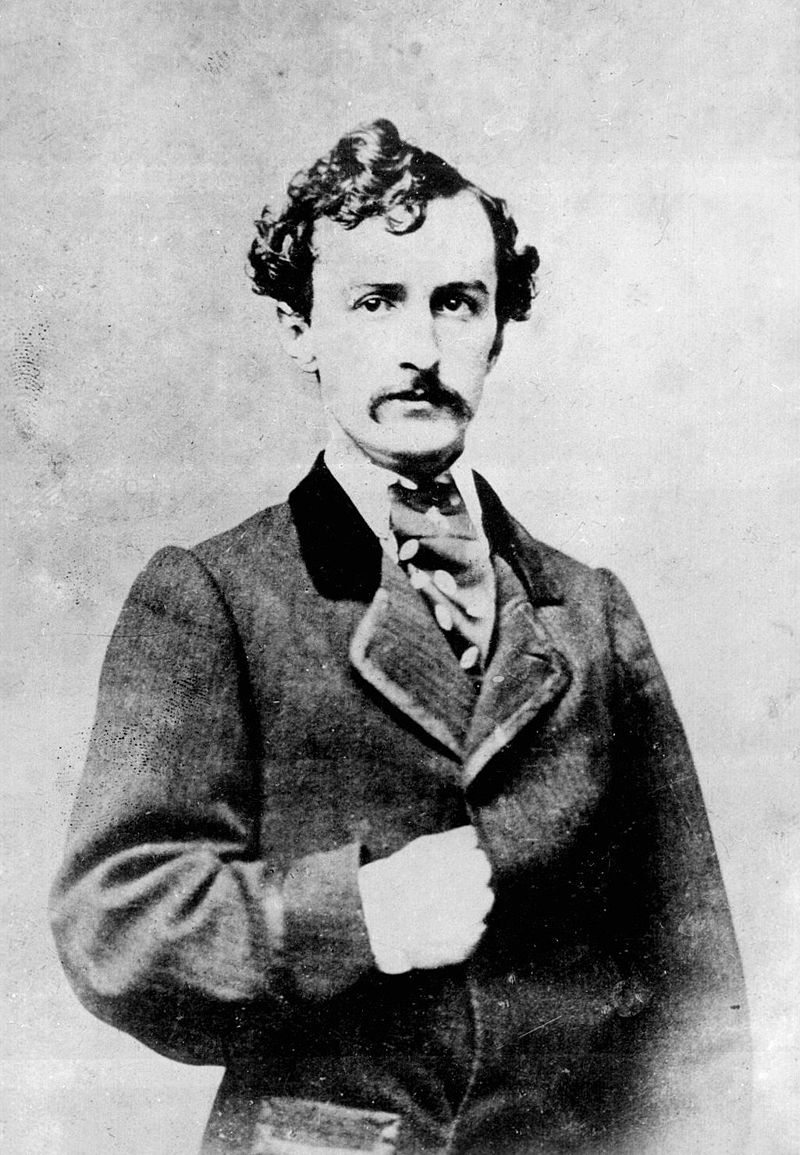
Therefore, today John Booth, who rid humanity of this unpleasant tyrant, deservedly graces the cover of the post

Blitz

Last time, I enjoyed responding not with one large text to a single question, but with short answers to a series of questions. A number of such topics that do not require detailed answers have accumulated in the queue.

Ancap-chi, it seems to me that it is better to promote the term “polystate” rather than “panarchy,” because the latter sounds too much like “anarchy,” and ordinary folks, as I think you know, are very triggered by that word.

It’s a matter of habit. Legend has it that the first libertarians in Russia were often mistaken for vegetarians. Minarchists, naturally, are mistakenly read by many as monarchists. As for the possibility of confusing panarchists with anarchists, at least that is not offensive, because panarchy is one of the paths to anarchy. It seems to me that terms like polystate make sense to be used as auxiliary for now. For example, “I am a panarchist, meaning I advocate for a polystate, or more accurately, for multiple governments within one country” (as Alexey Shustov correctly notes in one of his interviews, in the Russian language, the state is a subject, not a system, which creates inconvenience in political discussions, and it is better to use “country,” “government,” or “regime” depending on the context instead of the overly vague “state”).

I saw an ad for agorists here; they have an article about obtaining an anonymous debit card by forging appearance and a passport. Apparently, there is only administrative liability and a fine of up to 80 thousand for this, but perhaps you know better ways to remain anonymous when making purchases in fiat?

This refers to this post, where at the end I referred to an article from the Cryptoagora channel. By the way, in the post, describing crypto-ATMs, I wrote that they work only in one direction: buying bitcoins with fiat. Later, in Georgia, I verified that the reverse is also possible; there, I actually had to sell bitcoins. I just want to note that for greater anonymity, when approaching a crypto-ATM, you should wear dark glasses, pull something with a wide brim over your head, raise your collar—in short, hide your face as much as possible to shield yourself from cameras. Cameras can be located both in the crypto-ATM itself and around it. Also, of course, when you go to a crypto-ATM, it makes sense to take a phone with a “left” SIM card. All these paranoid measures are intended to complicate operational-investigative actions if you suddenly become their target for some reason.

Is it true that under anarcho-capitalism, intellectual property is not provided for?

Maxim

Any person has the right to monetize any of their intangible assets by any non-violent means. They have the right to use violence only in the case when they are attempted to be deprived of this asset entirely, but not when some information they possess is copied. Even if someone copies the private key to their bitcoin wallet, that is not yet theft. Theft is the use of the key to move bitcoins out of that wallet.

I just cannot understand who will act as the guarantor of compliance with the rules? What happens if some hypothetical Ramzan Akhmatovich in the role of a night watchman decides not just to guard the peace, but to start explaining a bit how people should live?

Noob

Any gatekeeper is inclined to increase their significance at the expense of those they are supposed to serve, i.e., the residents of the guarded facility. The only argument that can bring them to reason is the threat of monetary sanctions, and ultimately, dismissal. For the threat of dismissal to be real, there must be Ivan Petrovich, Ravshan Jamshutovich, Jet Li, and Sigurd Olafson standing behind the gates waiting to be hired. That is exactly why panarchism looks like a more sane idea than minarchism in terms of the possibilities of limiting power.

Unresolved Questions of Panarchy

In the book “After the State”, published in 2008, Alexei Shustov provides (pp. 66-67) a list of questions that remain unresolved in the panarchic model he proposed. Since then, thought has not stood still, and the Bitarch and I propose brief outlines of solutions to these issues.

1. How to organize border security? How to build and fund armed forces designed to protect the country from external force attempts?

As a reminder, the Shustov model is the construction of a panarchy within Russia as a single entity without dividing it into territorial units; therefore, the problem of external borders in such a poly-state remains relevant.

Border security in peacetime is quite pointless. It is impossible to block or levy duties on the cross-border movement of goods in a poly-state—the existence of a single ECU offering free trade is enough, and the entire flow will go through this internal offshore. The same applies to visa regimes. Individual ECUs may enforce boycotts of certain goods, people, and information for their clients, but this is carried out at the consumer level, not through border control.

Regarding protection from military invasion, the most important thing in the defense doctrine is the presence of citizens who have something to defend. The example of Ukraine shows that even under very unfavorable starting conditions, the self-organization of citizens works wonders. If free arms circulation exists in a number of the country’s jurisdictions, this significantly simplifies the task. However, such a militia plus private military companies are capable of handling territorial defense tasks rather. Meanwhile, a doctrine of preventing an attack by creating a personal threat to the leaders of the aggressor country can further reduce risks. With minimal coordination capabilities, governments will be able to agree on joint funding for a corresponding project of high-precision non-nuclear medium-range weapons, or some other surprises of the same sort.

2. How to organize international relations? Who and on what basis will represent the country in interaction with foreign states?

International relations consist of border demarcation, the procedure for extraditing criminals, visa regimes, and various duties.

Regarding borders, territorial states will find it difficult here, as their citizens will likely also begin to enter into agreements with ECUs—and it would be good if only with those attached to the corresponding territorial jurisdiction, because they might just as well agree with transnational ECUs. Cellular communication works in the border zone in both directions; similarly, regulations in the border zone will interpenetrate, further blurring the concept of the territorial state.

The procedure for extraditing criminals is relevant only in a situation of noticeable differences in legal systems and especially in law enforcement. Bargaining is inevitable here, in which more influential jurisdictions will have an advantage, but influence is an unstable substance and is distributed unevenly. In general, it will be the same as it is now, only more dynamic. At least, in situations of clear injustice, public outrage will be of greater importance for contract jurisdictions than for current democracies.

Duties, as shown above, if they exist at all, will only be unilateral, from the side of monopoly territorial entities; a poly-state cannot afford customs.

3. How to organize an effective rebuff to attempts by external forces of the financial-economic sector to heat up contradictions between different governments [ECUs] and exhaust the country by playing on this?

One can imagine a hypothetical foreign Putin sponsoring conservative ECUs in Russia that advocate for spiritual values, and it becomes more profitable to become a client of such an ECU. Meanwhile, he might, for example, deny visas to clients of liberal ECUs and prohibit investments in his lucrative raw-material economy. Usually, this leads to the “market deciding” to create imitative structures that demonstrate to the outside the traits for which people are willing to pay, but ignore the internal content: first, it is cheaper, and second, there is no internal demand for it.

Moreover, the world does not revolve around a single foreign Machiavelli, so those ECUs that he dislikes will cooperate with someone else.

4. How to solve environmental issues?

Each jurisdiction solves these issues in its own way. A liberal one leaves it to the owners, who, in turn, insure risks with insurance companies. A socialist one supports supervisory organizations that live for issuing fines or shaking down larger bribes (a bribe will not be more expensive than an insurance policy, otherwise the subject will flee to the liberals). Greens may found their own jurisdiction where consumers will support eco-friendly producers with money and boycott those who ignore the environment.

As for negative externalities arising from environmental disasters, they are compensated much more effectively through court in the presence of competing jurisdictions than under a monopoly burdened by a conflict of interest in the form of state ownership.

5. What to do with objects of cultural and historical heritage of the people to guarantee their preservation?

Objects of cultural and historical heritage bring profit because they are interesting to tourists. For them to be preserved, it must be profitable to preserve them. For this, in turn, the owners of these objects must benefit from tourism. This is typical liberal logic, thanks to which the owner of each specific potentially interesting object decides whether it is more profitable to try to earn from the flow of tourists or to use the object in some other way, for example, to demolish it and build something else. As a result of such an approach, a quite diverse building landscape is formed, where antiquity neighbors modernity.

Other ECUs may introduce regulations that prohibit the destruction of historical monuments, but they will have to somehow compensate the owners for this inconvenience, otherwise they will flee to the liberals. Thus, in ECUs for lovers of antiquity, taxes for the maintenance of monuments are inevitable. As a result, through third-party funding, monuments whose direct monetization is difficult can be preserved.

Organizations like UNESCO will also contribute to solving the problem, as they are capable to a certain extent of influencing tourist flows by labeling: this is a world heritage site, and this is not. However, I suspect that soon UNESCO’s influence on the tourism business will become lower than that of a hypothetical TripAdvisor, and there will be no need to sponsor this bureaucratic dinosaur at the state’s expense.

6. How to regulate relations in the field of natural resources, especially specific ones such as water, air, marine biological resources (which move across the territory and are therefore not tied to coordinates in space)?

In its time, hunting and gathering lost the economic competition to farming and animal husbandry due to their low efficiency. Similarly, as free fresh water, free sea fish, and free clean air become more expensive, the industrial production of these resources near the places of their consumption will become profitable. In short, this is not a question of jurisdictions at all, but a purely technical-economic question.

7. How to regulate relations in places with a high concentration of immovable property, where the actions of one owner can affect the essential characteristics of a neighboring owner’s property (for example, the construction of buildings that block existing ones)?

Of course, such issues are more conveniently solved within functional jurisdictions, such as homeowners associations. This is not provided for within the Shustov model, so the issue falls into the sphere of disputes between different jurisdictions, and it is difficult to predict what practices will emerge here.

8. How to organize effective protection against cartel agreements by the strongest players of various markets that have a predisposition to monopolization?

In a free market, a monopoly is formed only if the overall size of the market is comparable to the optimal size of a company in terms of labor productivity. In all other cases, monopolization is unprofitable, and it can either be an entrepreneurial error that will quickly bankrupt the company, or this monopoly is imposed by means of violence, which no longer has anything to do with a free market. Thus, the effective protection against monopolization is precisely the free market, and in a situation of competing jurisdictions with free entry and exit, the prerequisites for the market being free are far greater than under the current state of affairs.

9. How to counter attempts by socially maladjusted individuals (those currently called criminals) to undermine the public safety system, built on the principle of equal rights agreements, and achieve a chaos profitable for them?

Freedom of gun ownership and the right to self-defense work wonders in this regard. Individual ECUs that do not recognize their clients’ right to independently offer armed resistance to violence will be forced to indeed make every effort to suppress armed violence using professional police; otherwise, they will lose the loyalty of their clients, who will move to jurisdictions that at least do not get in the way.

Furthermore, a potential offender cannot always immediately determine which jurisdiction their potential victim belongs to, and consequently, whether they are ready to fight back. Thus, even a single ECU that allows its clients to arm themselves becomes a positive externality for the others.

Alexei Shustov